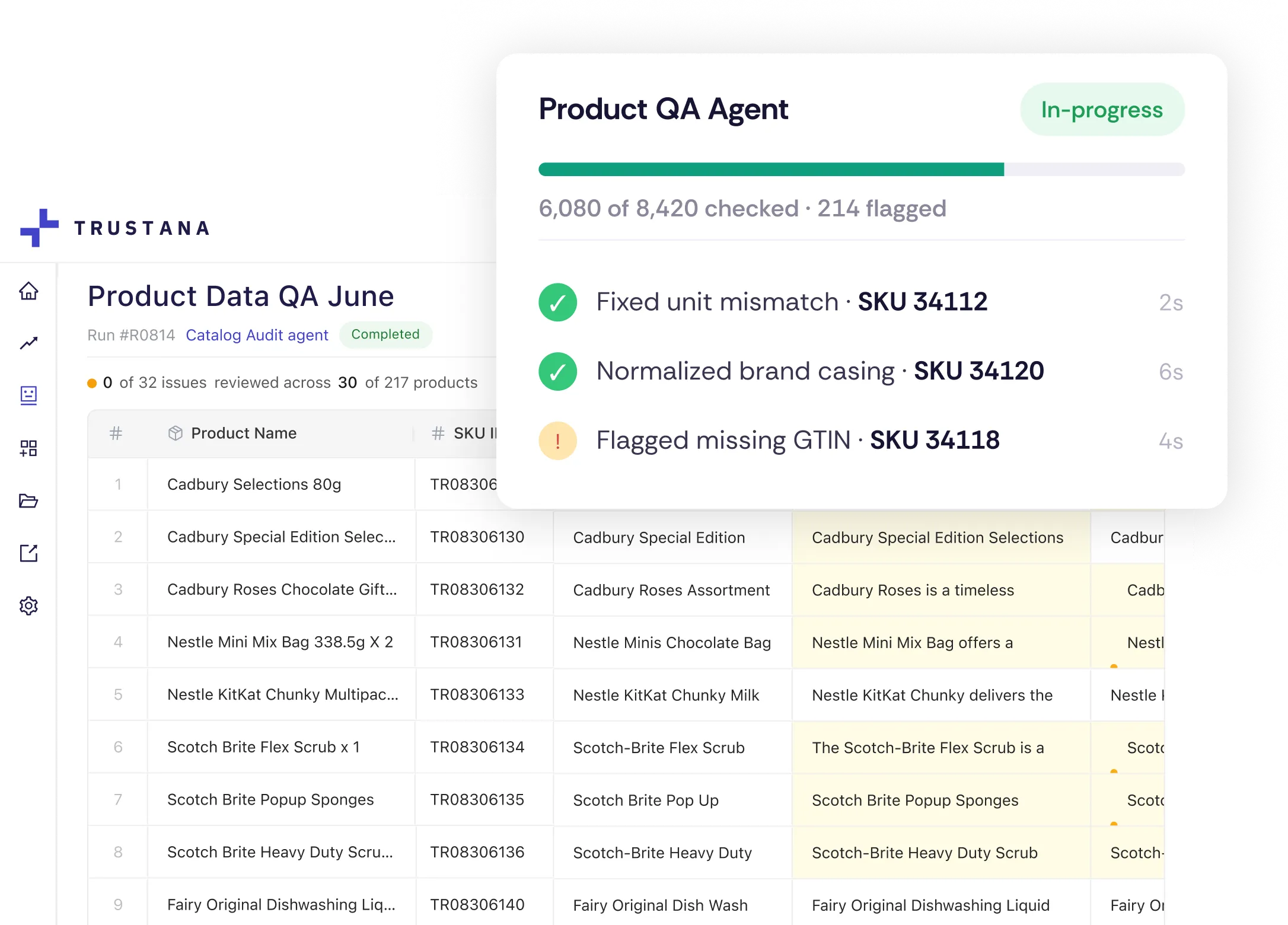
Give agents real work.
Keep real control.
You set the autonomy. Thresholds, approvals, and a full record of every action.
.webp)
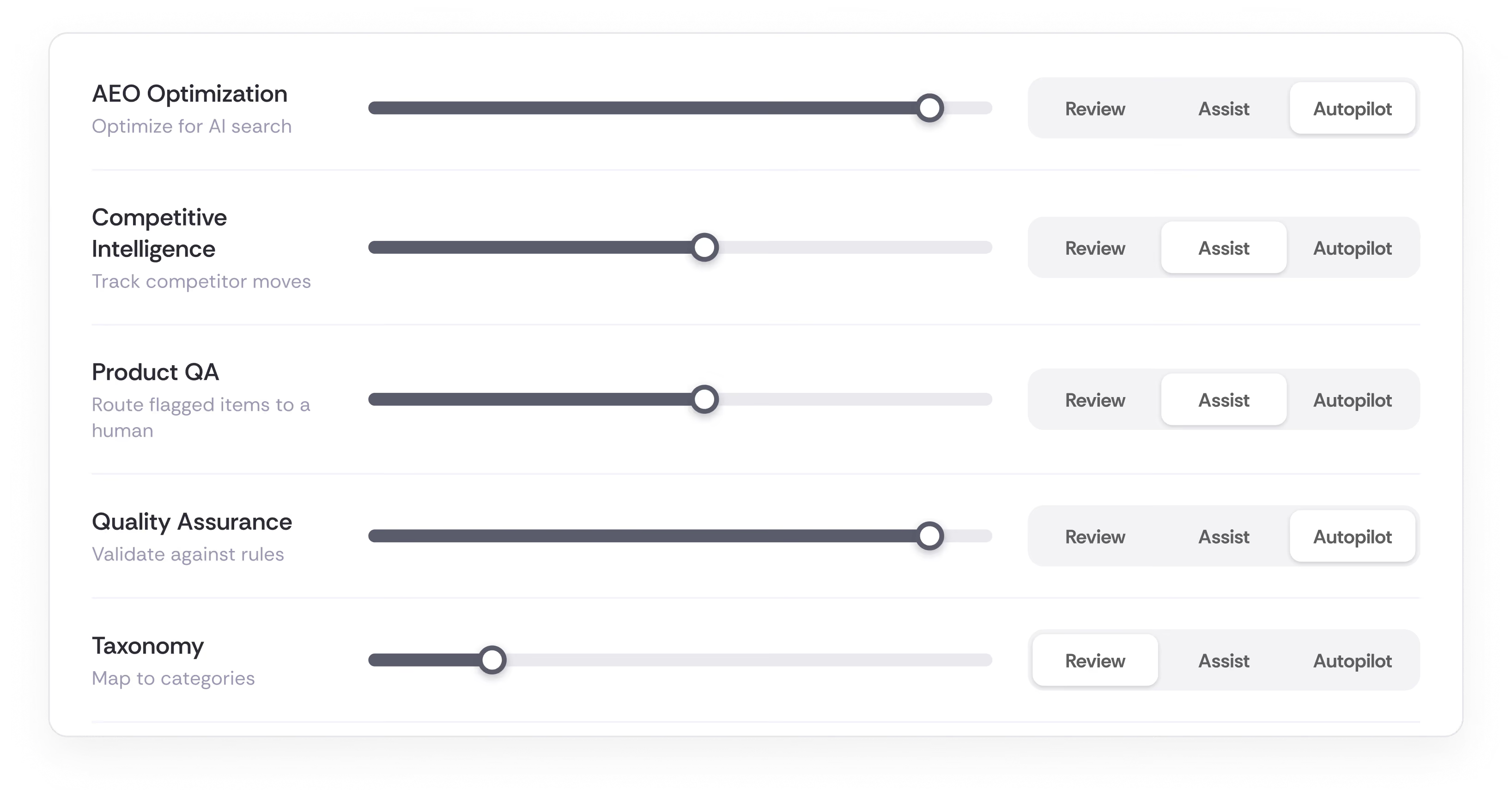
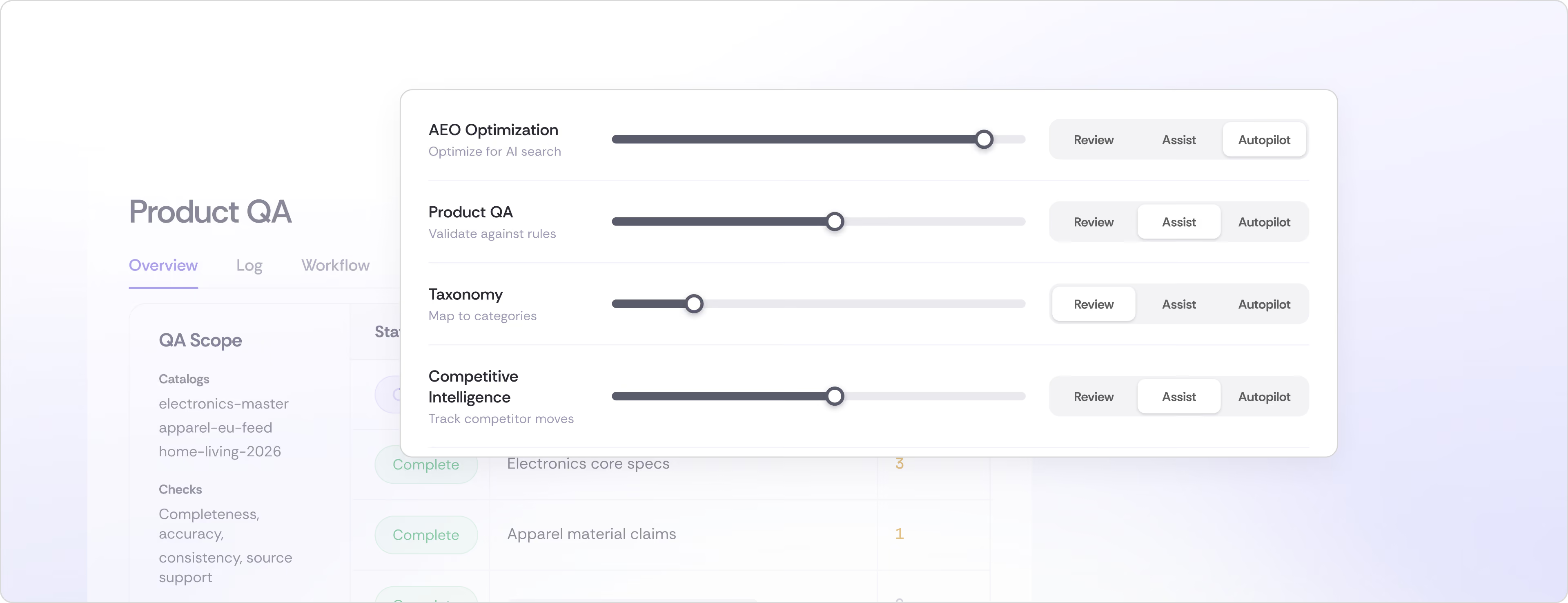
Autonomy is a dial, not a switch.
Some workflows should run on their own. Others need sign-off on every change. Set the dial per agent and per category, and turn it up as trust grows.
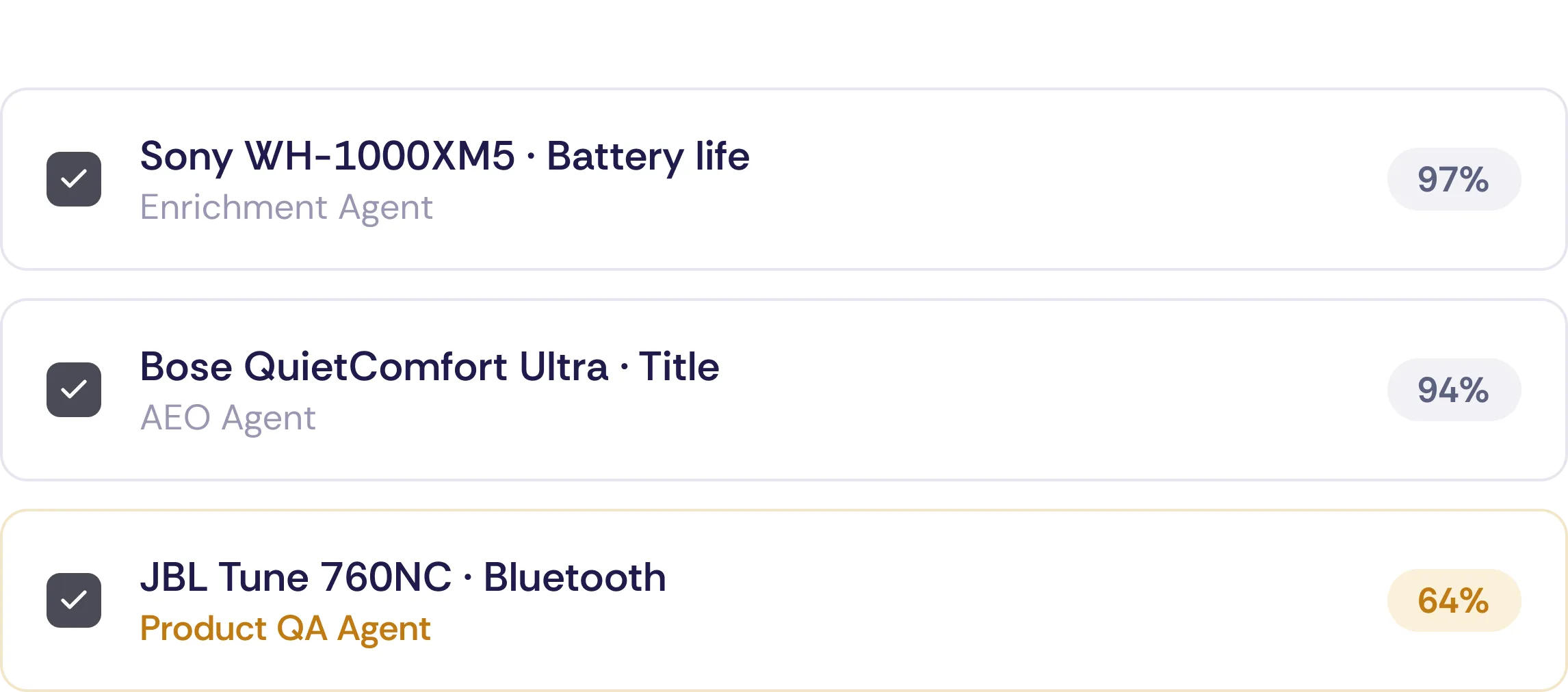
Confidence decides what runs alone
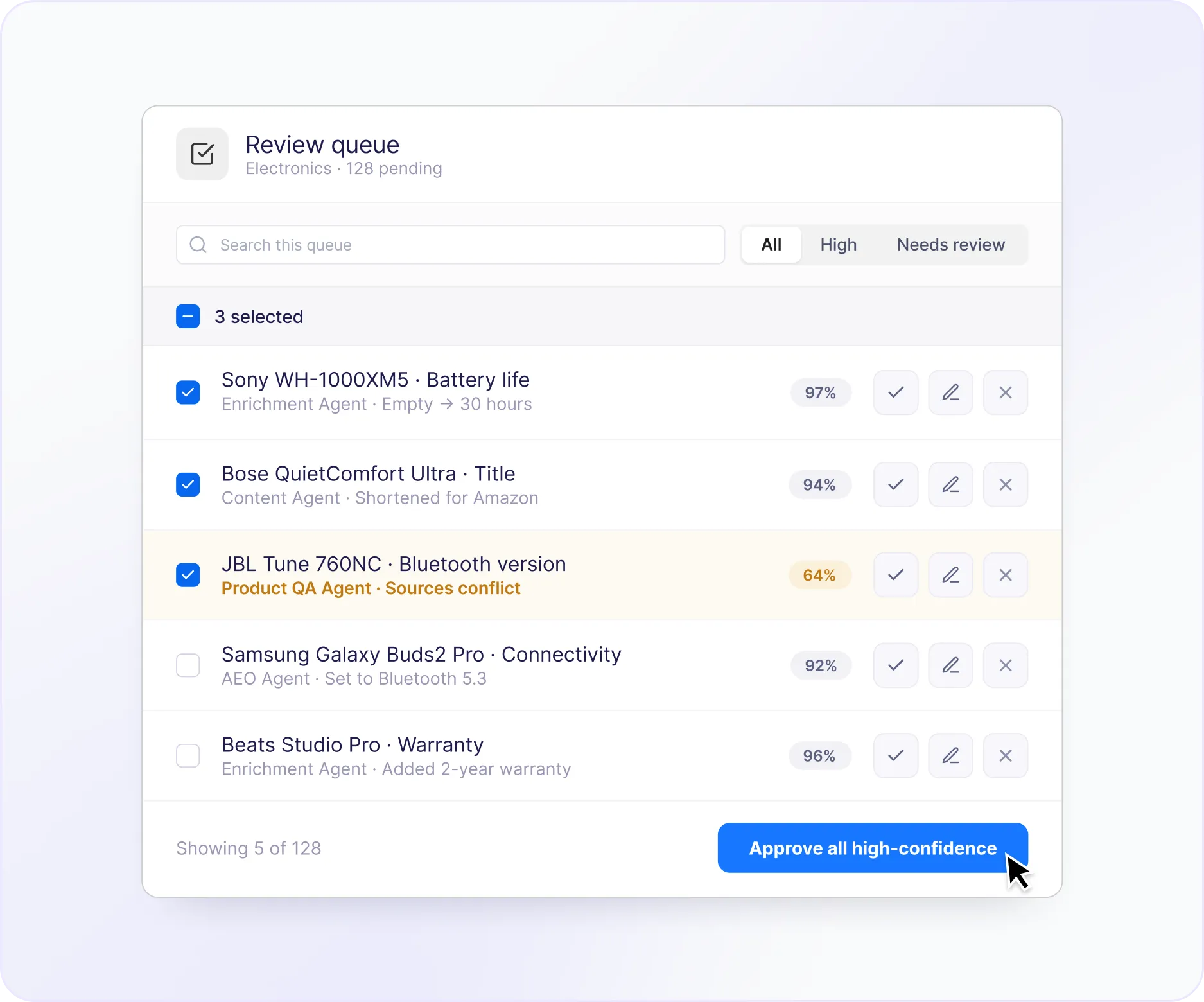
Every output carries a confidence score. High confidence work applies automatically. Everything else routes to your team with sources and reasoning attached.

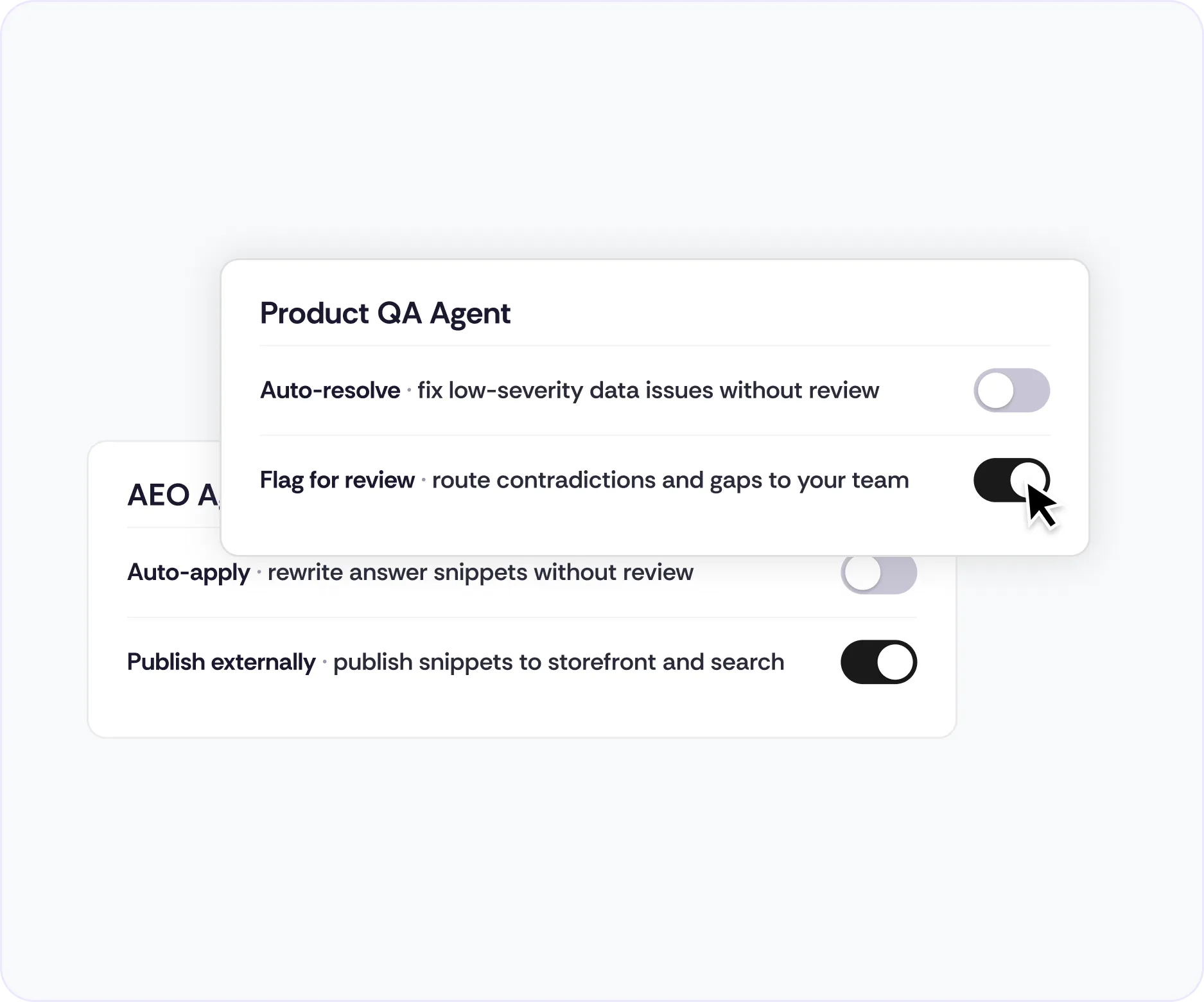
Approvals that fit your team
Route reviews by category, brand, channel, or market. Your team stops doing the repetitive work and starts certifying it.
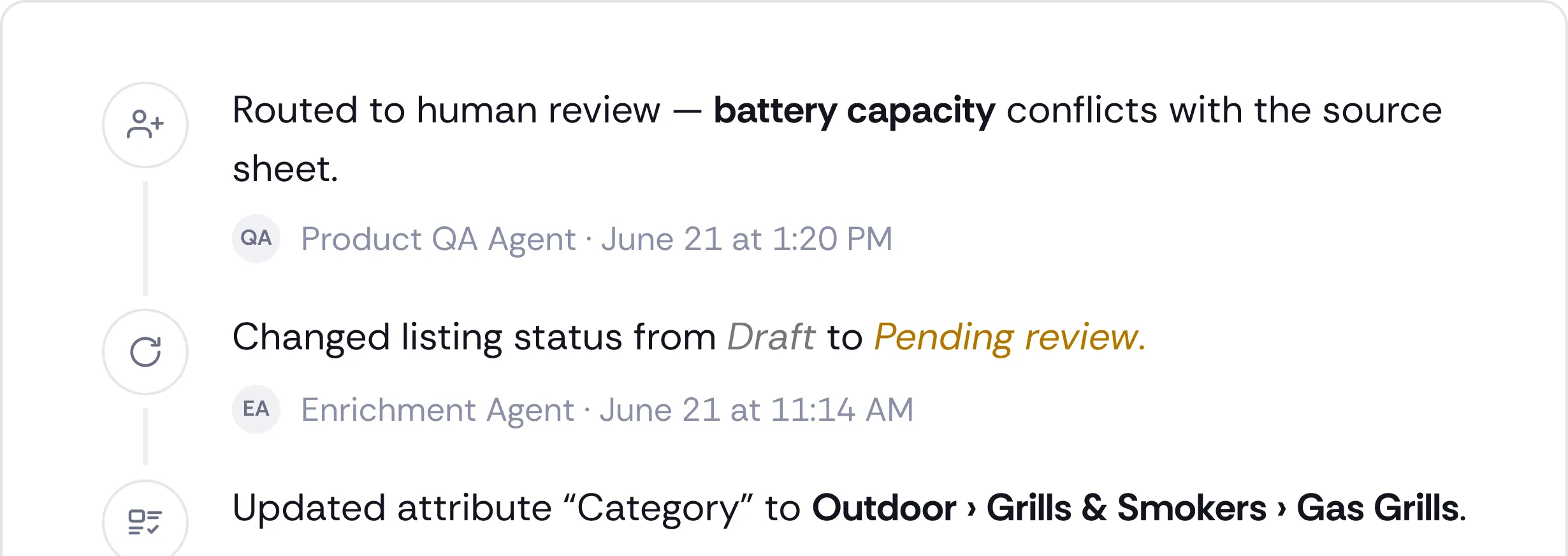
Every action on the record
See what every agent did, when, and why: what changed, which sources it used, and who approved it.

Everything you need to build commerce agents
Confidence thresholds
Define what applies automatically and what waits for review.

Review queues
Route outputs to the right reviewers with context attached.
Audit history
A complete record of every agent action and decision.
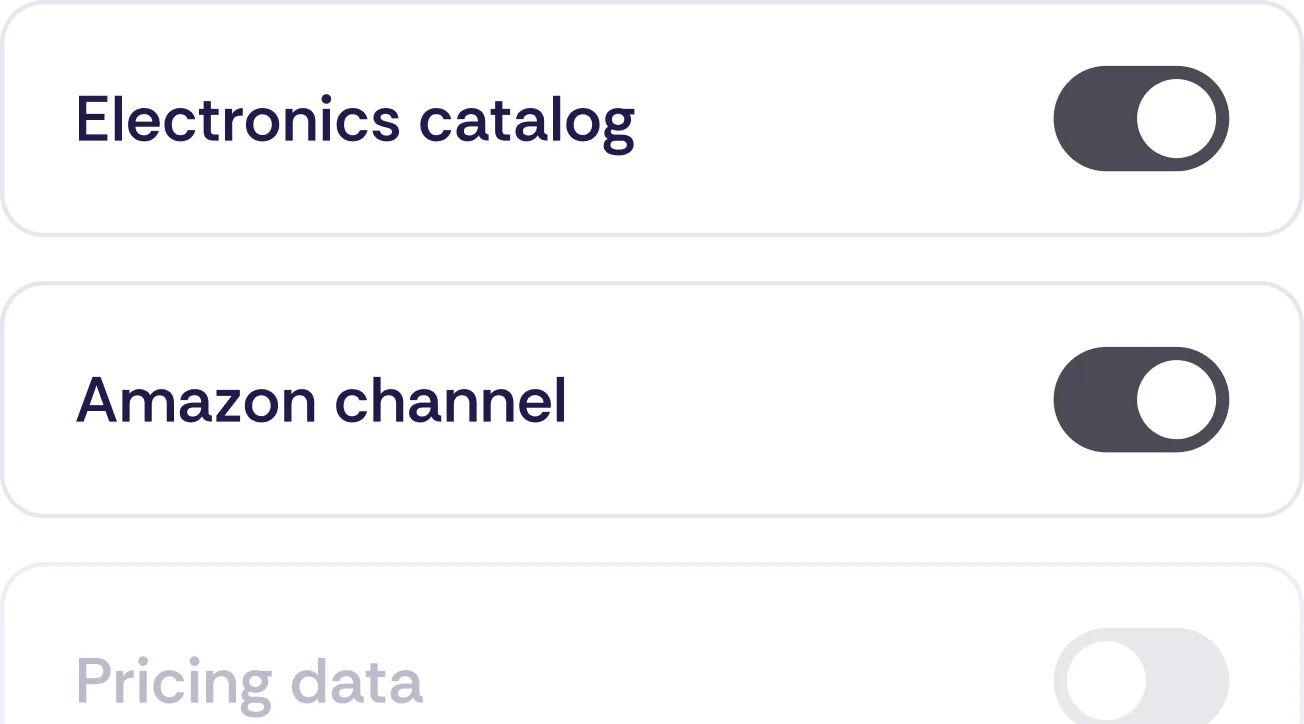
Scoped permissions
Agents work only within the data and channels you assign.
Your questions answered.
Can agents publish without review?
Only where you allow it. You set thresholds and scope per workflow. Everything else routes to your team first.
What does a reviewer actually see?
We select and continuously evaluate models for each workflow, measured on your data rather than public benchmarks. When a better model appears, we can swap it in without changing your setup.
How is this different from Governance & Trust?
Only within the scope and approvals you define. Many teams start with review on everything and raise autonomy as agents earn trust.
Can we start cautious and loosen over time?
Confidence scores on every output, plus validation by your team during onboarding. Your reviewers confirm the quality bar, not our internal view of it.
Automation your team can stand behind